


.jpg)
There is nothing civil about civil wars!
Showing posts with label Iraq War. Show all posts
Showing posts with label Iraq War. Show all posts
Wednesday, April 28, 2010
Friday, April 23, 2010
Disposable Soldiers
By Joshua Kors
April 22, 2010 "The Nation" - - The mortar shell that wrecked Chuck Luther's life exploded at the base of the guard tower. Luther heard the brief whistling, followed by a flash of fire, a plume of smoke and a deafening bang that shook the tower and threw him to the floor. The Army sergeant's head slammed against the concrete, and he lay there in the Iraqi heat, his nose leaking clear fluid.
"I remember laying there in a daze, looking around, trying to figure out where I was at," he says. "I was nauseous. My teeth hurt. My shoulder hurt. And my right ear was killing me." Luther picked himself up and finished his shift, then took some ibuprofen to dull the pain. The sergeant was seven months into his deployment at Camp Taji, in the volatile Sunni Triangle, twenty miles north of Baghdad. He was determined, he says, to complete his mission. But the short, muscular frame that had guided him to twenty-two honors--including three Army Achievement Medals and a Combat Action Badge--was basically broken. The shoulder pain persisted, and the hearing in his right ear, which evaporated on impact, never returned, replaced by the maddening hum of tinnitus.
Then came the headaches. "They'd start with a speckling in the corner of my vision, then grow worse and worse until finally the right eye would just shut down and go blank," he says. "The left one felt like someone was stabbing me over and over in the eye."
Doctors at Camp Taji's aid station told Luther he was faking his symptoms. When he insisted he wasn't, they presented a new diagnosis for his blindness: personality disorder.
"To be told that I was lying, that was a real smack in the face," says Luther. "Then when they said 'personality disorder,' I was really confused. I didn't understand how a problem with my personality could cause deafness or blindness or shoulder pain."
For three years The Nation has been reporting on military doctors' fraudulent use of personality disorder to discharge wounded soldiers [see Kors, "How Specialist Town Lost His Benefits," April 9, 2007]. PD is a severe mental illness that emerges during childhood and is listed in military regulations as a pre-existing condition, not a result of combat. Thus those who are discharged with PD are denied a lifetime of disability benefits, which the military is required to provide to soldiers wounded during service. Soldiers discharged with PD are also denied long-term medical care. And they have to give back a slice of their re-enlistment bonus. That amount is often larger than the soldier's final paycheck. As a result, on the day of their discharge, many injured vets learn that they owe the Army several thousand dollars.
According to figures from the Pentagon and a Harvard University study, the military is saving billions by discharging soldiers from Iraq and Afghanistan with personality disorder.
In July 2007 the House Committee on Veterans' Affairs called a hearing to investigate PD discharges. Barack Obama, then a senator, put forward a bill to halt all PD discharges. And before leaving office, President Bush signed a law requiring the defense secretary to conduct his own investigation of the PD discharge system. But Obama's bill did not pass, and the Defense Department concluded that no soldiers had been wrongly discharged. The PD dismissals have continued. Since 2001 more than 22,600 soldiers have been discharged with personality disorder. That number includes soldiers who have served two and three tours in Iraq and Afghanistan.
"This should have been resolved during the Bush administration. And it should have been stopped now by the Obama administration," says Paul Sullivan, executive director of Veterans for Common Sense. "The fact that it hasn't is a national disgrace."
On Capitol Hill, the fight is not over. In October four senators wrote a letter to President Obama to underline their continuing concern over PD discharges. The president, almost three years after presenting his personality disorder bill, says he remains concerned as well.
Veterans' leaders say they're particularly disturbed by Luther's case because it highlights the severe consequences a soldier can face if he questions his diagnosis and opposes his PD discharge.
Luther insisted to doctors at Camp Taji that he did not have personality disorder, that the idea of developing a childhood mental illness at the age of 36, after passing eight psychological screenings, was ridiculous. The sergeant used a vivid expression to convey how much pain he was in. "I told them that some days, the pain was so bad, I felt like dying." Doctors declared him a suicide risk. They collected his shoelaces, his belt and his rifle and ordered him confined to an isolation chamber.
Extensive medical records written by Luther's doctors document his confinement in the aid station for more than a month. The sergeant was kept under twenty-four-hour guard. Most nights, he says, guards enforced sleep deprivation, keeping the lights on and blasting heavy metal music. When Luther rebelled, he was pinned down and injected with sleeping medication.
Eventually Luther was brought to his commander, who told him he had a choice: he could sign papers saying his medical problems stemmed from personality disorder or face more time in isolation.
'Every Night It Was Megadeth'
Luther entered the Army in 1988, following in the footsteps of his grandfathers, both decorated World War II veterans. In 2005, after Hurricane Katrina, he and his unit were deployed to New Orleans, where he helped evacuate residents and dispose of bodies left in the street. In 2006 he was deployed from Fort Hood in Texas to Camp Taji, where he performed reconnaissance with the First Squadron, Seventh Cavalry Regiment, led by Maj. Christopher Wehri. "Luther was older and more mature than most of the soldiers. He was forthcoming, very polite," says Wehri. "He seemed to have a good head on his shoulders."
Doctors at the aid station didn't see him that way. Following the May 2007 mortar attack, Luther entered the base's clinic and described his concussion symptoms to Capt. Aaron Dewees. Dewees, a pediatrician charged with caring for soldiers in the 1-7 Cavalry, grew suspicious of Luther's self-report. "It is my professional opinion," Dewees wrote in his medical records, "that Sgt. Charles F. Luther Jr. has been misrepresenting himself and his self-described medical conditions for secondary gain." The doctor suggested that Luther was faking his ailments to avoid reconnaissance duty. He called the sergeant "narcissistic" and said Luther's descriptions of his injuries were a mixture of "exaggeration and flat-out fabrication."
Luther's medical records document severe nosebleeds and "sharp and burning" pain. Still, the sergeant says he could sense that his doctors didn't believe him. It was at that point--frustrated, plagued by blinding migraines--that he spoke of pain so severe he wished he were dead. "I made clear that I was not going to kill myself, that it was just a colorful expression to explain how much pain I was in." Dewees agreed. In their records, Luther's doctors note a "suicide gesture" and "'off-handed' comments" that the sergeant was going to kill himself, but Dewees said those gestures were "unlikely to have been a serious attempt" at self-harm. Nonetheless, Dewees wrote, such statements "must be taken seriously and treated as such," that Luther "remains a threat to himself and others given his need for attention, narcissistic tendencies and impulsive behavior."
Luther was taken to an isolation chamber and told this was his new sleeping quarters. The room, which Luther captured on his digital camera, served as a walk-in closet. It was slightly larger than an Army cot and was crammed with cardboard boxes, a desk and a bedpan. Through a small, cracked window, he could look out onto the base. Through the open doorway, the sergeant was monitored by armed guards.
Both Dewees and Lt. Col. Larry Applewhite, an aid station social worker, declared Luther mentally ill, suffering from a personality disorder. The next step was to remove him from the military as fast as possible. "It is strongly recommended that Sgt. Luther be administratively separated via Chapter 5-13," wrote Applewhite, citing the official discharge code for personality disorder. In a separate statement, Dewees endorsed the 5-13 discharge and urged that it be handled rapidly. "I feel the safest course of action," he wrote, "is to expedite his departure from theater."
That didn't happen. For more than a month Luther remained in his six-by-eight-foot isolation chamber, weeks he describes as "the hardest of my life." He says the guards would ridicule him and most nights enforced sleep deprivation, keeping the lights on all night and using a nearby Xbox and TV speakers to blast heavy metal into his room. "Every night it was Megadeth, Saliva, Disturbed." The sergeant pulled a blanket over his head to block out the noise and the light, but it was no use.
"They told me I wasn't a real soldier, that I was a piece of crap. All I wanted was to be treated for my injuries. Now suddenly I'm not a soldier. I'm a prisoner, by my own people," says Luther, his voice tightening. "I felt like a caged animal in that room. That's when I started to lose it."
Isolated, exhausted, the sergeant who had been confined for being mentally ill says he began feeling exactly that. Finally Luther snapped. He stepped out of his room and was walking toward a senior official's office when an altercation broke out. In the ensuing scuffle, Luther bit one of his guards, then spit in the face of the aid station chaplain. The sergeant was pinned to the floor and injected with five milligrams of Haldol, an antipsychotic medication. Sedated, Luther was returned to isolation.
Staff Sgt. James Byington, who was serving at Camp Taji with the 1-7 Cavalry, walked the half-mile to the aid station to visit his fellow soldier. Byington says that off the battlefield, Sergeant Luther was "animated and peppy," the comedian of the chow hall. During combat, he says, Luther was focused and prepared, a key component in a farmland raid just outside Taji that discovered a cache of weapons and money. The man he found in the isolation chamber was neither the soldier nor the comedian, he says, but something altogether odd and decrepit. "He wasn't energetic like he used to be. He wasn't cutting jokes. Chuck's one of those guys that talks with his hands. You go into a room with twenty guys, and you're going to hear Chuck Luther," says Byington. "Now he seemed half-asleep. He looked worn out."
A few hours after Byington's visit, Luther was called to his commander's office. Major Wehri was frank. He held the personality disorder discharge papers in his hand. "And he said, 'Sign this paperwork, and we'll get you out.' I said, 'I don't have a personality disorder.' But it was like that didn't matter," says Luther. "He said, 'If you don't sign this, you're going to be here a lot longer.'"
The sergeant signed. "They had me broke down," he says. "At that point, I just wanted to get home." Luther's voice grows quiet as he recounts that final meeting. "I still remember Wehri's face," he says. "He was smiling."
Wehri confirms his statements to Luther. He says he pressed the sergeant to sign because he felt it was in Luther's best interest and in the best interest of the Army. The sergeant, he says, "had gotten so belligerent. If we had returned him to his unit, he would have been a danger to himself and to others. His behavior was not suitable to military service. And he wanted to get home. So I told him, 'If your goal is to get home, and we've diagnosed you with personality disorder, your fastest way is to sign the papers. If you don't sign, you're just subjecting yourself to further anguish and discomfort.'"
Wehri insists that his comments to Luther were not pivotal to the sergeant's discharge. Even without a soldier's signature, a PD dismissal can proceed. But the papers would then move to an Army lawyer, and the process would be delayed. "You can't force anyone to sign," he says. "But if you're going to be stubborn and not sign, try to play hardball, you run the risk of a dishonorable discharge. With Luther's biting and spitting, I could have court-martialed him out right there for failure to perform in a military manner."
The major says Luther's real story is that of a good soldier who came home for leave, saw his wife's new haircut and slimmed figure and was driven mad by fears of her infidelity. "When he came back to Iraq, something had changed. He had a negative attitude. He wouldn't respond to direct orders. His head wasn't in the game." Wehri says it became clear to him that Luther was intent on returning home right away, a realization that left him disappointed but not shocked. "Soldiers are conniving," he says. "They are manipulative. If they get in their minds they want to do something for personal gain, including going home, they'll go to any lengths to get it."
Wehri rejects the idea that the mortar attack and subsequent concussion could have triggered Luther's woes. "That mortar attack was nothing," he says. "Insignificant. Maybe he fell down. Sure. I've fallen down lots of times." The major wonders aloud whether Luther is using that injury to justify his instability. He says if he thought the attack was significant, he would have investigated it fully and gotten the ball rolling for a Purple Heart.
The major confirms that Luther was confined to the aid station for several weeks and that his room was minuscule. But he says those circumstances were unavoidable. "Discharging a soldier with personality disorder is a very long and drawn-out process," he says. "And Luther was a danger to himself and others. He needed to be watched. The aid station, that's where they had 24-7 supervision."
Wehri says he marvels at the idea that Luther could be a poster child for false personality disorder discharges. He has seen seven personality disorder cases in his career, he says. "And Chuck Luther was by far the clearest one." The major says that when Luther's troubles began, the sergeant's behavior confounded him. Then, says Wehri, he heard from a commander who said Luther's family had spoken with him and revealed that Luther had suffered from psychiatric problems before entering the military and had been treated with medication. "Then suddenly it made sense to me," says Wehri. "This was not new. His symptoms were just popping up now, after he'd kept a lid on them for many years. It all clicked into place."
But Luther's wife and his mother say that story is flatly false. Both say they never had such a conversation with an Army commander and are emphatic that the sergeant never faced any psychiatric problems before entering the military. "Hearing that makes me really angry," says Luther's mother, Barbara Guignard. "Chuck was an all-American boy. He never took any medication, and he never had a problem."
How Dewees and Applewhite came to the conclusion that Luther was suffering from a pre-existing mental illness remains unclear. They declined to elaborate on their notes or discuss the diagnosis of personality disorder in general. What is clear is that neither Dewees nor Applewhite spoke with Luther's family before determining that his problems existed before his military service. The sergeant's wife and his mother say that had they been asked, both could have provided key information demonstrating Luther's stability and health before the mortar attack.
Spc. Angel Sandoval says he could have helped as well. Sandoval, who was stationed at Camp Taji and served under Luther in the 1-7 Cavalry, laughs at the idea that the sergeant was mentally ill. "Chuck was a lot more than 'not mentally ill,'" he says. "He saved my life." Sandoval describes heading into combat under Luther's command. The specialist was ready to dump his side-SAPIs, large ceramic plates that strap to the side of a bulletproof vest, protecting the kidneys from machine-gun fire. "They're bulky and kinda heavy, but he said, 'No way, you have to wear them,'" says Sandoval. "Two days later I got shot right there, under my arm. It could have killed me."
Luther, he says, was "one of the greatest leaders I had. He never steered me wrong. If they thought he was ill and needed medical help, they should have given it to him instead of kicking him out of the Army."
But it was Wehri and Applewhite's view that mattered. Soon after signing the personality disorder papers, Luther was placed in a DC-10 and whisked back to Fort Hood. There he would learn about Chapter 5-13's fine print: he was ineligible for disability benefits, since his condition was pre-existing. He would not be receiving the lifetime of medical care given to severely wounded soldiers. And because he did not complete his contract, he would have to return a slice of his signing bonus.
At the base, a Fort Hood discharge specialist laid out the details. "He said I now owed the Army $1,500. And if I did not pay, they'd garnish my wages and assess interest on my debt," Luther says.
Luther was then released into a pelting Texas rain. He called his wife, Nicki, to pick him up. "When I got to Fort Hood he was in the parking lot, alone, wet, sitting on his duffel bag," Nicki recalls. "He had lost a lot of weight. He looked like...a little boy. I remember thinking, My God, what have they done to my husband?"
The President 'Continues to Be Concerned'
Luther's case is not an isolated incident. In the past three years, The Nation has uncovered more than two dozen cases like his from bases across the country. All the soldiers were examined, deemed physically and psychologically fit, then welcomed into the military. All performed honorably before being wounded during service. None had a documented history of psychological problems. Yet after seeking treatment for their wounds, each soldier was diagnosed with a pre-existing personality disorder, then discharged and denied benefits.
That group includes Sgt. Jose Rivera, whose hands and legs were punctured by grenade shrapnel during his second tour in Iraq. Army doctors said his wounds were caused by personality disorder. Sailor Samantha Stitz fractured her pelvis and two bones in her ankle. Navy doctors cited personality disorder as the cause. Spc. Bonnie Moore developed an inflamed uterus during her service. Army doctors said her profuse vaginal bleeding was caused by personality disorder. Civilian doctors disagreed: they performed emergency surgery to remove her uterus and appendix. After being discharged and denied benefits, Moore and her teenage daughter became homeless.
"The military is exacerbating an already bad situation," says Sullivan of Veterans for Common Sense. "This is more than neglect. It's malice." Sullivan's organization has spent the past few years pressing officials in Washington to take action on the personality disorder issue. In July 2007 he testified before the House Committee on Veterans' Affairs. Sullivan told the committee that PD discharges needed to be halted immediately.
That month Obama put forward his bill to do just that. The bill was matched in the House by legislation from Representative Phil Hare, and it had passionate support on both sides of the aisle, from prominent Democrats like Senator Barbara Boxer to high-ranking Republicans like Senator Kit Bond. Sullivan and other veterans' leaders say they were hopeful that Obama would use the spotlight of the presidential campaign to generate further momentum for his bill.
That didn't happen. In the twenty-one months of his presidential run, the Illinois senator never spoke publicly about PD discharges or his bill to halt them. Eventually, without widespread public knowledge or support, and facing opposition from senators who had never heard of personality disorder and worried the bill would open a floodgate of expensive benefits, Obama and Bond, the bill's co-author, were forced to reshape it into an amendment and water down its contents. Their amendment did not halt PD discharges. Instead, it required the Pentagon to investigate PD dismissals and report back to Congress. The amendment, part of the Defense Authorization Act, was signed by President Bush in January 2008.
Five months later the report landed on Obama's and Bond's desks. The Pentagon's conclusion: no soldiers had been improperly diagnosed, and none had been wrongly discharged. The report praises the military's doctors as "competent professionals" and endorses continued use of pre-existing personality disorder to discharge soldiers whose "ability to function effectively" is impaired. The report's author, former Under Secretary of Defense David Chu, further notes that though the Navy's official label for the discharge is "Separation by Reason of Convenience of the Government," soldiers "are not wantonly discharged at the convenience of the Military."
It is unclear how Chu came to these conclusions. The report does not cite any interviews with soldiers discharged with personality disorder, or their families, doctors or commanders. That fact infuriated many military families, as it triggered memories of a 2007 study by former Army Surgeon General Gale Pollock. Pollock had been asked to examine a stack of PD cases. Five months later she released her report, saying her office had "thoughtfully and thoroughly" reviewed them. Like Chu, she commended the soldiers' doctors and determined that they all had been properly diagnosed. The Nation later revealed that Pollock's office did not interview anyone, not even the soldiers whose cases she was reviewing [see Kors, "Specialist Town Takes His Case to Washington," October 15, 2007].
"He doesn't talk to soldiers, and he doesn't talk to their families?" says Nicki Luther, the sergeant's wife, her eyes welling with tears. "I heard the same thing from that surgeon general, and I thought, You haven't been in my house. You don't know what I've dealt with. How dare you sit there and say you've investigated thoroughly and found nothing. That's a crock."
The Chu report does recommend several changes to the PD discharge system, alterations, it says, that will protect soldiers from being wrongly discharged. Those protections include requiring that a doctor diagnose the soldier's personality disorder and a lawyer counsel him on the ramifications of the discharge. The report also recommends that the surgeon general review each soldier's case and endorse the PD discharge before releasing the soldier from the military.
Chu, a Bush appointee, left office in 2008 with the president. But his findings remain as the Defense Department's position on PD discharges. In early April the Pentagon released a statement saying that Clifford Stanley, the current under secretary, is implementing Chu's recommendations and fully embraces his findings.
That fact left many on Capitol Hill enraged. "This study, with the new requirement to have the upper-ups approve discharges--all it basically did was set up one more hurdle. As far as we can tell, the impact has been somewhere between zero and less," says Senator Bond. Bond says the Pentagon still hasn't explained the fundamental contradiction of a PD discharge: recruits who have a severe pre-existing mental illness could not pass the rigorous screening process and would not be accepted into the military in the first place. Yet he says his office is looking at several cases, like Luther's, in which the soldiers have been deemed physically and psychologically fit in several screenings before their personality disorder is diagnosed. "These men and women who have put their lives on the line, we owe them," says Bond. "We have a responsibility. Discharging them with personality disorder--it's just an easy way to duck that responsibility."
The Republican from Missouri says he's hopeful that Obama, his partner on the PD bill, will take action from the White House. "He has a unique chance now to change the whole operation, to alter the system from the inside." In October Bond gathered a small coalition of senators and wrote a letter to the president, asking him to confront the issue once again. "In 2007 we were partners in the fight against the military's misuse of personality disorder discharges," wrote the senators. "Today, we urge you to renew your commitment to address this critical issue."
The next week Senator Boxer, a co-sponsor of the original bill, submitted a statement of her own. "It is simply appalling that any combat veteran with a Traumatic Brain Injury [TBI] or Posttraumatic Stress Disorder would be denied medical care for injuries sustained during combat," Boxer wrote. Even with the reforms that followed the Chu report, "we must make sure that the new discharge process...is working."
The White House responded quickly, assuring the senators that the president still has his eye on personality disorder. President Obama "is determined to fulfill America's responsibility to our Armed Forces," says White House spokesman Nicholas Shapiro. "The president was concerned with personality disorder discharges as a senator, and he drafted a bill. He continues to be concerned as commander in chief."
Disposable Warriors
Luther hopes that concern will translate into action. The sergeant stands in his backyard, 1,500 miles from Washington, five miles from Fort Hood, talking about Obama's bill and watching his 7-year-old daughter floating high above the family's oversize trampoline, her face wild with joy. Luther looks on with sullen eyes. "Right now I can't worry about Washington, or even about fixing my discharge papers," he says. "First thing, I got to fix myself." He gestures to his daughter, a mop of blond hair leaping to and fro. "I used to be like that: a goofball, all this energy. Now... I don't know."
Some nights he doesn't sleep. Others he's back in Iraq, in the aid station, in endless isolation. The blinding headaches and piercing shoulder pain still plague him, he says, along with panic attacks and bursts of post-traumatic stress-fueled rage. Luther broke four bones in his hand punching a hole in his bedroom wall. His family's hallway is pocked with holes from similar incidents.
"He's not the man I married," says Nicki Luther. "And when I'm honest with myself, I don't think I'll ever have that man again. He wakes up screaming in the middle of the night, sweating, swearing." Nicki says he tries to be a good dad to their kids. "He used to wrestle around with them. But his body's like an old man's now. And he's so quick to anger. The kids say, 'We want our dad back.' I don't know what to tell them."
Three years after the mortar blast, Luther's life is still on shaky ground. Some days he's posting love notes on his wife's Facebook page and hand-delivering her favorite salad to her office at lunchtime. Another day, in the midst of an argument, he knocked down a family photo, then ripped the furniture out of the living room and dumped it in the garage, scaring his children. Soon after the birth of their fourth child, Marlee Grace, Luther and his wife separated. They reunited a few months later, in time for their eighteenth anniversary.
Luther knew he needed help. This time he sought it outside the military. He began seeing Troy Daniels, a psychologist, once a week. One fact was clear immediately, says Daniels. "He did not have personality disorder. The symptoms we were looking at looked more like traumatic brain injury and post-traumatic stress disorder. To take a soldier having problems with vision, hearing and so forth--and to say he has personality disorder--that's a bogus kind of statement. I don't even think a master's student would make that kind of mistake."
While Daniels dismisses the Army doctors' diagnosis as a "gross error," he says he was not surprised by it. "I've treated hundreds of soldiers over the years, and I've seen a dozen personality disorder diagnoses. None of them," says the psychologist, "actually had personality disorder."
Yet all of those soldiers, he says, faced serious repercussions because of their discharge. "Many of the soldiers can't get hired anymore. Every time they go for a job, they'll have this paper that says they've been diagnosed with a personality disorder. Employers take one look at that and think, 'This guy's crazy. We can't hire him.' For most of the soldiers," says Daniels, "it becomes a lifetime label."
Luther luckily has secured a job, as a truck driver for Frito-Lay. Securing benefits has proved a bit tougher. Since being released from the Army, the sergeant has been locked in battle with the VA, fighting to prove that despite his PD discharge, his wounds are war related and thus worthy of disability and medical benefits.
Those efforts stumbled at first. In May 2008 the VA declared Luther "incompetent" and demanded that a fiduciary collect any disability benefits he may receive. Eventually, following a slew of paperwork and medical exams, the sergeant re-established his full standing. This past December--after VA doctors found Luther to be suffering from migraine headaches, vision problems, dizziness, nausea, difficulty hearing, numbness, anxiety and irritability--the VA cited traumatic brain injury and post-traumatic stress disorder and declared Luther 80 percent disabled. "PTSD, a consequence of the TBI," wrote one VA doctor, "is a clear diagnosis."
The VA rating cleared the way for the sergeant to receive disability benefits and a lifetime of medical care. But it hasn't changed the Army's view--or altered Luther's discharge papers, which still list the sergeant as suffering from personality disorder. The sergeant, in return, has refused to pay back the $1,500 of his signing bonus that the Army says he owes, despite threats to garnish his wages. "I told them, Let me put it this way: as long as I'm breathing of my own free will, I'm not paying you a dime."
Luther says what really boils his blood is having to accept that his military career is over while the careers of those who devised his discharge are flourishing. After Luther's dismissal, Wehri, a captain at the time, was promoted to major and selected to be an executive officer with NATO. Dr. Dewees returned to Kentucky, where he continues to serve with the National Guard. Social worker Applewhite is now an instructor at Fort Sam Houston, where he teaches a class on how to identify mental disorders.
With or without the Army, Luther says he will continue to serve. With his health gradually improving and the bulk of his battle over, the sergeant is taking on a new mission: fighting the military on behalf of other soldiers like himself. Luther is now the founder and executive director of Disposable Warriors, a one-man operation that assists soldiers who are fighting their discharge and veterans who are appealing their disability rating.
Luther's organization did not receive a hero's welcome. Soon after founding the group, he discovered a threatening note on his windshield. "Back off or you and your family will pay!!" it read, in careful, black ink cursive. Weeks later, thieves broke into the home of a veterans' organizer who worked closely with Luther, taking nothing but the files of the soldiers they were assisting.
The sergeant, characteristically, is undaunted. "This is the right path for me," he says, his voice resolute. "I got to be there for these other soldiers. I'm not the only one who needs help."
Joshua Kors covers veterans' issues for The Nation. He is the winner of the National Magazine Award, George Polk Award, and Military Reporters and Editors Award. He was also a finalist for Harvard's Goldsmith Prize for Investigative Reporting and the American Bar Association's Silver Gavel Award. His work is featured in the American Society of Magazine Editors' recent anthology "The Best American Magazine Writing 2008."
There is nothing civil about civil wars!


Friday, April 16, 2010
Iraqracy At Work
IRAQ
Ayad Allawi
More than a month after Iraq's parliamentary elections on March 7, Iraq's politicians still have not been able to form a government. "Protracted negotiations over who will lead the country are still underway, even in the face of a recent spate of violence and terrorist attacks in the street," reports Center for American Progress Senior Fellow Brian Katulis. Incumbent Prime Minister Nouri al-Maliki's State of Law coalition received two fewer seats than the Iraqiyya coalition, which is led by former interim Iraqi prime minister Ayad Allawi, a secular Shiite. Iraqiyya draws much of its support from secular nationalist Sunnis, though one of its leading figures, Tareq al-Hashemi, currently Iraq's most senior Sunni Arab official who, until recently, led the religious Iraqi Islamic party. Reports indicated that the Iraqi National Alliance -- a coalition made up largely of religious Shiites and led by the Sadrist party of Muqtada al-Sadr -- and Maliki's State of Law coalition were close to a merger, which "would put the combined bloc within two seats of the 163-seat majority needed to form a government." Journalist Gregg Carlstrom notes, however, that the parties "still need to decide who's going to be the prime minister," as the Sadrists have made clear that they oppose Maliki. On Wednesday, Allawi "warned that the country could slide into a sectarian war if his group is shut out of the next government and said the United States should work more aggressively to prevent that from happening."
THE ROLE OF IRAN AND SAUDI ARABIA: Though some have called the recent elections "a defeat for Iran," Iran's continuing influence in Iraq was demonstrated by the fact that Iraq's leading Shiite and Kurdish parties all sent delegations to Tehran after the elections. On April 9, the Iranian government called on Iraqi leaders "to include Sunnis in the long-overdue new government and said Shiites would have to form an alliance with them for that to happen." The statement marked a shift for Iran, which has long supported a Shia-dominated Iraq and whose influence is believed to have been behind the attempt by Iraq's de-Baathification commission to disqualify large numbers of Sunni candidates in the weeks leading up to the election. An Iraqiyya delegation also visited Iran this week in order to secure Iranian government support for Iraqiyya-led government. At the same time, Iraqi vice president Tareq al-Hashemi visited Saudi Arabia for talks with Saudi King Abdullah. Hashemi's visit to Riyadh "follows similar trips by leading Iraqi politicians from all communities" -- Kurdish and Shiite as well as Sunni Arab, including Ammar al-Hakim, leader of the Shiite Islamic Supreme Council of Iraq (ISCI). ISCI has strong ties to Iran, and also enjoyed the early backing of the U.S. coalition government, but has fared poorly in subsequent elections. Predominantly Sunni Saudi Arabia "is most concerned about Shiite arch-rival Iran's potential influence over any Baghdad administration."
CONTINUING TENSIONS: Iraq continues to face a number of serious problems. Though violence has stayed down from its 2006-7 peak, Iraq still regularly experiences terrorism. A recent study "found Iraq the number one country in the world most at risk for terrorist attacks." Though al Qaeda in Iraq has been significantly weakened, it retains the ability to carry out massively destructive acts like the recent bombings of the Iranian and German embassies and the Egyptian Consulate, which killed 41 and wounded 237. A recent report from Refugees International also said that "Iraq faces a dire humanitarian crisis as huge numbers of displaced Iraqis struggle to survive in squalid camps." The United Nations estimates that some 4.7 million Iraqis have been displaced since the 2003 invasion of Iraq. "Of the 1.5 million internally displaced people (IDPs) forced from their homes in 2006 and 2007," the report said, "33 percent or 500,000 live as squatters in slum areas." Tensions between Iraqi Arabs and Kurds remain high, especially over the status of oil-rich Kirkuk.
MAINTAINING THE DRAWDOWN: Some analysts have argued that Iraq's continuing problems show the need for the U.S. to slow its drawdown of troops from the country. Tom Ricks, a Senior Fellow at the Center for a New American Security, wrote recently that "probably...the best course" for Obama would be to "break his campaign promises about ending the war, and to offer to keep tens of thousands of troops in Iraq for several more years." The Brookings Institution's Ken Pollack wrote last month that one problem Obama faces is a domestic political base that is "fanatical that he keep to this drawdown schedule regardless of what happens in Iraq." But, as Katulis notes, "If anyone is 'fanatical' about adhering to the troop withdrawal timelines, it is the Iraqis. Iraq's leaders demanded a clear timeline for troop withdrawals in its negotiations with the Bush administration, and there are strong political actors in Iraq who are demanding an end to what they view as an 'occupation.'" One of the most important moments in the consolidation of sovereign Iraqi political authority was the U.S. military's withdrawal from Iraq's cities, celebrated all over the country as Iraqi Sovereignty Day. "The United States should carefully monitor the situation inside Iraq as it continues the troop withdrawal outlined by the Bush administration," Katulis writes, "but it would be unwise to look for excuses to stay longer than Iraqis want."
Ayad Allawi
More than a month after Iraq's parliamentary elections on March 7, Iraq's politicians still have not been able to form a government. "Protracted negotiations over who will lead the country are still underway, even in the face of a recent spate of violence and terrorist attacks in the street," reports Center for American Progress Senior Fellow Brian Katulis. Incumbent Prime Minister Nouri al-Maliki's State of Law coalition received two fewer seats than the Iraqiyya coalition, which is led by former interim Iraqi prime minister Ayad Allawi, a secular Shiite. Iraqiyya draws much of its support from secular nationalist Sunnis, though one of its leading figures, Tareq al-Hashemi, currently Iraq's most senior Sunni Arab official who, until recently, led the religious Iraqi Islamic party. Reports indicated that the Iraqi National Alliance -- a coalition made up largely of religious Shiites and led by the Sadrist party of Muqtada al-Sadr -- and Maliki's State of Law coalition were close to a merger, which "would put the combined bloc within two seats of the 163-seat majority needed to form a government." Journalist Gregg Carlstrom notes, however, that the parties "still need to decide who's going to be the prime minister," as the Sadrists have made clear that they oppose Maliki. On Wednesday, Allawi "warned that the country could slide into a sectarian war if his group is shut out of the next government and said the United States should work more aggressively to prevent that from happening."
THE ROLE OF IRAN AND SAUDI ARABIA: Though some have called the recent elections "a defeat for Iran," Iran's continuing influence in Iraq was demonstrated by the fact that Iraq's leading Shiite and Kurdish parties all sent delegations to Tehran after the elections. On April 9, the Iranian government called on Iraqi leaders "to include Sunnis in the long-overdue new government and said Shiites would have to form an alliance with them for that to happen." The statement marked a shift for Iran, which has long supported a Shia-dominated Iraq and whose influence is believed to have been behind the attempt by Iraq's de-Baathification commission to disqualify large numbers of Sunni candidates in the weeks leading up to the election. An Iraqiyya delegation also visited Iran this week in order to secure Iranian government support for Iraqiyya-led government. At the same time, Iraqi vice president Tareq al-Hashemi visited Saudi Arabia for talks with Saudi King Abdullah. Hashemi's visit to Riyadh "follows similar trips by leading Iraqi politicians from all communities" -- Kurdish and Shiite as well as Sunni Arab, including Ammar al-Hakim, leader of the Shiite Islamic Supreme Council of Iraq (ISCI). ISCI has strong ties to Iran, and also enjoyed the early backing of the U.S. coalition government, but has fared poorly in subsequent elections. Predominantly Sunni Saudi Arabia "is most concerned about Shiite arch-rival Iran's potential influence over any Baghdad administration."
CONTINUING TENSIONS: Iraq continues to face a number of serious problems. Though violence has stayed down from its 2006-7 peak, Iraq still regularly experiences terrorism. A recent study "found Iraq the number one country in the world most at risk for terrorist attacks." Though al Qaeda in Iraq has been significantly weakened, it retains the ability to carry out massively destructive acts like the recent bombings of the Iranian and German embassies and the Egyptian Consulate, which killed 41 and wounded 237. A recent report from Refugees International also said that "Iraq faces a dire humanitarian crisis as huge numbers of displaced Iraqis struggle to survive in squalid camps." The United Nations estimates that some 4.7 million Iraqis have been displaced since the 2003 invasion of Iraq. "Of the 1.5 million internally displaced people (IDPs) forced from their homes in 2006 and 2007," the report said, "33 percent or 500,000 live as squatters in slum areas." Tensions between Iraqi Arabs and Kurds remain high, especially over the status of oil-rich Kirkuk.
MAINTAINING THE DRAWDOWN: Some analysts have argued that Iraq's continuing problems show the need for the U.S. to slow its drawdown of troops from the country. Tom Ricks, a Senior Fellow at the Center for a New American Security, wrote recently that "probably...the best course" for Obama would be to "break his campaign promises about ending the war, and to offer to keep tens of thousands of troops in Iraq for several more years." The Brookings Institution's Ken Pollack wrote last month that one problem Obama faces is a domestic political base that is "fanatical that he keep to this drawdown schedule regardless of what happens in Iraq." But, as Katulis notes, "If anyone is 'fanatical' about adhering to the troop withdrawal timelines, it is the Iraqis. Iraq's leaders demanded a clear timeline for troop withdrawals in its negotiations with the Bush administration, and there are strong political actors in Iraq who are demanding an end to what they view as an 'occupation.'" One of the most important moments in the consolidation of sovereign Iraqi political authority was the U.S. military's withdrawal from Iraq's cities, celebrated all over the country as Iraqi Sovereignty Day. "The United States should carefully monitor the situation inside Iraq as it continues the troop withdrawal outlined by the Bush administration," Katulis writes, "but it would be unwise to look for excuses to stay longer than Iraqis want."
There is nothing civil about civil wars!
Wednesday, April 14, 2010
Your Tax Dollars at War:
More Than 53% of Your Tax Payment Goes to the Military
By Dave Lindorff'
April 13, 2010 "Information Clearing House" - -If you’re like me, now that we’re in the week that federal income taxes are due, you are finally starting to collect your records and prepare for the ordeal. Either way, whether you are a procrastinator like me, or have already finished and know how much you have paid to the government, it is a good time to stop and consider how much of your money goes to pay for our bloated and largely useless and pointless military.
The budget for the 2011 fiscal year, which has to be voted by Congress by this Oct. 1, looks to be about $3 trillion, not counting the funds collected for Social Security (since the Vietnam War, the government has included the Social Security Trust Fund in the budget as a way to make the cost of America’s imperial military adventures seem smaller in comparison to the total cost of government). Meanwhile, the military share of the budget works out to about $1.6 trillion.
That figure includes the Pentagon budget request of $717 billion, plus an estimated $200 billion in supplemental funding (called “overseas contingency funding” in euphemistic White House-speak), to fund the wars in Afghanistan and Iraq, some $40 billion or more in “black box” intelligence agency funding, $94 billion in non-DOD military spending (that would include stuff like military activies funded through NASA, military spending by the State Department, etc., miilitary-related activities within the Dept. of Homeland Security, etc.), $123 billion in veterans benefits and health care spending, and $400 billion in interest on debt raised to pay for prior wars and the standing military during peacetime (whatever that is!).
The 2011 military budget, by the way, is the largest in history, not just in actual dollars, but in inflation-adjusted dollars, exceeding even the spending in World War II, when the nation was on an all-out war footing.
This military spending in all its myriad forms works out to represent 53% of total US federal spending.
It’s also a military budget that is rising at a faster pace than any other part of the budget (with the possible exception of bailing out crooked Wall Street financial firms and their managers). For the past decade, and continuing under the present administration, military budgets have been rising at a 9% annual clip, making health care inflation look tiny by comparison.
US military spending isn’t just half of the US budget, though. It is also half of the entire global spending on war and weaponry. In 2009, according to the venerable War Resisters League, US military spending accounted for 47% of all money spent globally on war, weapons and military preparedness (it's probably closer to 50% now). What makes that staggering figure particularly ridiculous is that America’s allies--countries like France, Britain, Germany, Italy, and Japan--account for another 21% of the world’s military spending. Fully 12 of the top-spenders among big military-spending nations are either allies of the US, or are friendly or completely non-threatening countries like Brazil and India. That is to say, America and its friends and allies account for more than two-thirds of all military spending worldwide.
China, in contrast, probably the closest thing to a real “threat” to American interests because of America’s treaty commitments to the island nation of Taiwan, and China’s counter claim that the island is a part of the PRC, spends only some $130 billion on its military, much of which is actually devoted to maintaining military control over the country’s own 1.3 billion people, some of whom might prefer to be independent, or to be freer, if they weren't under the military jack-boot.
The next biggest military spender, Russia, spends less than $80 billion a year on its decrepit military--about one-twentieth of what the US spends--and isn’t even technically an enemy of the America anymore. Its military is largely busy keeping restive regions from spinning off from the mother country, anyhow.
Meanwhile Iran, which the White House and Congress are portraying as America’s arch enemy, despite its not having invaded another country in hundreds of years, isn’t even on the list of the top 17 military big-spenders. Iran’s current military budget is a teensy $4.8 billion (no surprise since its economy is about equal to Finland's), about the same as the estimated $5 billion spent on the military by North Korea--America’s other “major enemy.” Each of those country’s military budgets is about one-quarter of the military budget of Australia. Combined, they add up to about two thirds of the military budget of the Netherlands.
Just to give one an idea of how small $4.8 billion is in comparison to the $1.6 trillion that the US is spending each year on war and planning for war, that number is roughly what the Pentagon plans to spend over the next year on childcare and youth programs, morale and recreation programs and commissaries on its bases! It’s about what the Pentagon will spend acquiring replacement Seahawk, Chinook and Blackhawk helicopters this year.
For the average American, what all this means is that of every dollar you send to the IRS, 53 cents will be going to pay for blowing stuff up, fattening the wallets of colonels admirals and generals, bloating the portfolios of investors in military industries, and of course funding the bonuses paid to executives of those companies, and the campaign chests and private expense accounts of the members of Congress who vote for these outlandish budgets. Your money will also be going to pay for the salaries and the bullets of those brave heroes over in Afghanistan who are executing kids, killing pregnant women (and then digging out the bullets and claiming they were stabbed by their families), and for the anti-personnel weapons that are creating legions of legless Afghani kids.
Next time you hear that the government needs to cut funds for providing medical care to the children of laid-off workers, or that supplemental unemployment funds are running out, next time you hear that federal funds that are needed to fund extra teachers at your school are being cut, or that Social Security benefits need to be cut back, or the retirement age needs to be increased to 70, next time you hear that your local post office has to be shut down for lack of funds, next time you hear that Medicare benefits need to be reduced, think about that 53% of your tax payment that is going to finance the most enormous war machine the world has ever known.
And ask yourself: Is this really necessary? Is this really where I want my money going? Is this really even making me safer or my country stronger?
Award-winning investigative reporter Dave Lindorff has been working as a journalist for 37 years. A regular columnist for CounterPunch, he also writes for Extra! and Salon magazine, as well as for Businessweek, The Nation and Treasury&Risk Magazine. Visit his website http://www.thiscantbehappening.net/
There is nothing civil about civil wars!
Wednesday, April 7, 2010
OMG. Still not cynical enough to just get over it.
by Laura Flanders | April 7, 2010 - 11:48am
Those words, spoken by a faceless soldier, echo from a classified US military video released by the site Wikileaks.org. The release comes on the heels of the revelation of a cover-up in Afghanistan--and the anniversary of the death of Dr. Martin Luther King, as well as the anniversary of his "Beyond Vietnam" speech.
King spoke to the Clergy and Laity Concerned about Vietnam, saying "It should be incandescently clear that no one who has any concern for the integrity and life of America today can ignore the present war. If America's soul becomes totally poisoned, part of the autopsy must read Vietnam."
Hearing allegations that special forces troops in Afghanistan may have dug the bullets out of their pregnant victims bodies to hide evidence, hearing airmen on the Wikileaks tape begging "Come on, let us shoot!" and hearing the editor of Wikileaks say that the shooters talked in the way that people do when they're playing video games--it reminded me of King's words.
He told the truth about war: that it is horrible, that it does poison your soul. Dr. King also said, in a different speech, that there is such a thing as being too late when it comes to speaking up against your goverment doing wrong.
The F Word is a regular commentary by Laura Flanders, the host of GRITtv which broadcasts weekdays on satellite TV (Dish Network Ch. 9415 Free Speech TV) on cable, and online at GRITtv.org and TheNation.com. Support us by signing up for our podcast, and follow GRITtv or GRITlaura on Twitter.com.
_______
"Well, it's their fault bringing their kids to a battle."
King spoke to the Clergy and Laity Concerned about Vietnam, saying "It should be incandescently clear that no one who has any concern for the integrity and life of America today can ignore the present war. If America's soul becomes totally poisoned, part of the autopsy must read Vietnam."
Hearing allegations that special forces troops in Afghanistan may have dug the bullets out of their pregnant victims bodies to hide evidence, hearing airmen on the Wikileaks tape begging "Come on, let us shoot!" and hearing the editor of Wikileaks say that the shooters talked in the way that people do when they're playing video games--it reminded me of King's words.
He told the truth about war: that it is horrible, that it does poison your soul. Dr. King also said, in a different speech, that there is such a thing as being too late when it comes to speaking up against your goverment doing wrong.
The F Word is a regular commentary by Laura Flanders, the host of GRITtv which broadcasts weekdays on satellite TV (Dish Network Ch. 9415 Free Speech TV) on cable, and online at GRITtv.org and TheNation.com. Support us by signing up for our podcast, and follow GRITtv or GRITlaura on Twitter.com.
_______
There is nothing civil about civil wars!
What Happened In Iraq?
Horrible things happen in war. Anyone who doesn't know that is a fool.
Hate rots the heart and warps the mind.
Wednesday 07 April 2010
by: Dahr Jamail, t r u t h o u t | Report
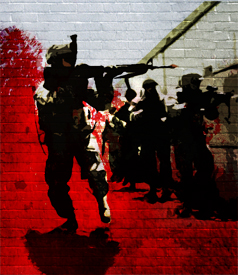
On Monday, April 5, Wikileaks.org posted video footage from Iraq, taken from a US military Apache helicopter in July 2007 as soldiers aboard it killed 12 people and wounded two children. The dead included two employees of the Reuters news agency: photographer Namir Noor-Eldeen and driver Saeed Chmagh.
The US military confirmed the authenticity of the video.
The footage clearly shows an unprovoked slaughter, and is shocking to watch whilst listening to the casual conversation of the soldiers in the background.
As disturbing as the video is, this type of behavior by US soldiers in Iraq is not uncommon.
Truthout has spoken with several soldiers who shared equally horrific stories of the slaughtering of innocent Iraqis by US occupation forces.
"I remember one woman walking by," said Jason Washburn, a corporal in the US Marines who served three tours in Iraq. He told the audience at the Winter Soldier hearings that took place March 13-16, 2008, in Silver Spring, Maryland, "She was carrying a huge bag, and she looked like she was heading toward us, so we lit her up with the Mark 19, which is an automatic grenade launcher, and when the dust settled, we realized that the bag was full of groceries. She had been trying to bring us food and we blew her to pieces."
The hearings provided a platform for veterans from Iraq and Afghanistan to share the reality of their occupation experiences with the media in the US.
Washburn testified on a panel that discussed the rules of engagement (ROE) in Iraq, and how lax they were, to the point of being virtually nonexistent.
"During the course of my three tours, the rules of engagement changed a lot," Washburn's testimony continued, "The higher the threat the more viciously we were permitted and expected to respond. Something else we were encouraged to do, almost with a wink and nudge, was to carry 'drop weapons', or by my third tour, 'drop shovels'. We would carry these weapons or shovels with us because if we accidentally shot a civilian, we could just toss the weapon on the body, and make them look like an insurgent."
Hart Viges, a member of the 82nd Airborne Division of the Army who served one year in Iraq, told of taking orders over the radio.
"One time they said to fire on all taxicabs because the enemy was using them for transportation.... One of the snipers replied back, 'Excuse me? Did I hear that right? Fire on all taxicabs?' The lieutenant colonel responded, 'You heard me, trooper, fire on all taxicabs.' After that, the town lit up, with all the units firing on cars. This was my first experience with war, and that kind of set the tone for the rest of the deployment."
Vincent Emanuele, a Marine rifleman who spent a year in the al-Qaim area of Iraq near the Syrian border, told of emptying magazines of bullets into the city without identifying targets, running over corpses with Humvees and stopping to take "trophy" photos of bodies.
"An act that took place quite often in Iraq was taking pot shots at cars that drove by," he said, "This was not an isolated incident, and it took place for most of our eight-month deployment."
Kelly Dougherty - then executive director of Iraq Veterans Against the War - blamed the behavior of soldiers in Iraq on policies of the US government.
"The abuses committed in the occupations, far from being the result of a 'few bad apples' misbehaving, are the result of our government's Middle East policy, which is crafted in the highest spheres of US power," she said.
Michael Leduc, a corporal in the Marines who was part of the US attack on Fallujah in November 2004, said orders he received from his battalion JAG officer before entering the city were as follows: "You see an individual with a white flag and he does anything but approach you slowly and obey commands, assume it's a trick and kill him."
Brian Casler, a corporal in the Marines, spoke of witnessing the prevalent dehumanizing outlook soldiers took toward Iraqis during the invasion of Iraq.
"... on these convoys, I saw Marines defecate into MRE bags or urinate in bottles and throw them at children on the side of the road," he stated.
Scott Ewing, who served in Iraq from 2005-2006, admitted on one panel that units intentionally gave candy to Iraqi children for reasons other than "winning hearts and minds.
"There was also another motive," Ewing said. "If the kids were around our vehicles, the bad guys wouldn't attack. We used the kids as human shields."
In response to the WikiLeaks video, the Pentagon, while not officially commenting on the video, announced that two Pentagon investigations cleared the air crew of any wrongdoing.
A statement from the two probes said the air crew had acted appropriately and followed the ROE.
Adam Kokesh served in Fallujah beginning in February 2004 for roughly one year.
Speaking on a panel at the aforementioned hearings about the ROE, he held up the ROE card soldiers are issued in Iraq and said, "This card says, 'Nothing on this card prevents you from using deadly force to defend yourself'."
Kokesh pointed out that "reasonable certainty" was the condition for using deadly force under the ROE, and this led to rampant civilian deaths. He discussed taking part in the April 2004 siege of Fallujah. During that attack, doctors at Fallujah General Hospital told Truthout there were 736 deaths, over 60 percent of which were civilians.
"We changed the ROE more often than we changed our underwear," Kokesh said, "At one point, we imposed a curfew on the city, and were told to fire at anything that moved in the dark."
Kokesh also testified that during two cease-fires in the midst of the siege, the military decided to let out as many women and children from the embattled city as possible, but this did not include most men.
"For males, they had to be under 14 years of age," he said, "So I had to go over there and turn men back, who had just been separated from their women and children. We thought we were being gracious."
Steve Casey served in Iraq for over a year starting in mid-2003.
"We were scheduled to go home in April 2004, but due to rising violence we stayed in with Operation Blackjack," Casey said, "I watched soldiers firing into the radiators and windows of oncoming vehicles. Those who didn't turn around were unfortunately neutralized one way or another - well over 20 times I personally witnessed this. There was a lot of collateral damage."
Jason Hurd served in central Baghdad from November 2004 until November 2005. He told of how, after his unit took "stray rounds" from a nearby firefight, a machine gunner responded by firing over 200 rounds into a nearby building.
"We fired indiscriminately at this building," he said. "Things like that happened every day in Iraq. We reacted out of fear for our lives, and we reacted with total destruction."
Hurd said the situation deteriorated rapidly while he was in Iraq. "Over time, as the absurdity of war set in, individuals from my unit indiscriminately opened fire at vehicles driving down the wrong side of the road. People in my unit would later brag about it. I remember thinking how appalled I was that we were laughing at this, but that was the reality."
Other soldiers Truthout has interviewed have often laughed when asked about their ROE in
Iraq.
Garret Reppenhagen served in Iraq from February 2004-2005 in the city of Baquba, 40 kilometers (about 25 miles) northeast of Baghdad. He said his first experience in Iraq was being on a patrol that killed two Iraqi farmers as they worked in their field at night.
"I was told they were out in the fields farming because their pumps only operated with electricity, which meant they had to go out in the dark when there was electricity," he explained, "I asked the sergeant, if he knew this, why did he fire on the men. He told me because the men were out after curfew. I was never given another ROE during my time in Iraq."
Emmanuel added: "We took fire while trying to blow up a bridge. Many of the attackers were part of the general population. This led to our squad shooting at everything and anything in order to push through the town. I remember myself emptying magazines into the town, never identifying a target."
Emmanuel spoke of abusing prisoners he knew were innocent, adding, "We took it upon ourselves to harass them, and took them to the desert to throw them out of our Humvees, while kicking and punching them when we threw them out."
Jason Wayne Lemue is a Marine who served three tours in Iraq.
"My commander told me, 'Kill those who need to be killed, and save those who need to be saved'; that was our mission on our first tour," he said of his first deployment during the invasion.
"After that the ROE changed, and carrying a shovel, or standing on a rooftop talking on a cell phone, or being out after curfew [meant those people] were to be killed. I can't tell you how many people died because of this. By my third tour, we were told to just shoot people, and the officers would take care of us."
When this Truthout reporter was in Baghdad in November 2004, my Iraqi interpreter was in the Abu Hanifa mosque that was raided by US and Iraqi soldiers during Friday prayers.
"Everyone was there for Friday prayers, when five Humvees and several trucks carrying [US soldiers and] Iraqi National Guards entered," Abu Talat told Truthout on the phone from within the mosque while the raid was in progress. "Everyone starting yelling 'Allahu Akbar' (God is the greatest) because they were frightened. Then the soldiers started shooting the people praying!"
"They have just shot and killed at least four of the people praying," he said in a panicked voice, "At least 10 other people are wounded now. We are on our bellies and in a very bad situation."
Iraqi Red Crescent later confirmed to Truthout that at least four people were killed, and nine wounded. Truthout later witnessed pieces of brain splattered on one of the walls inside the mosque while large blood stains covered carpets at several places.
This type of indiscriminate killing has been typical from the initial invasion of Iraq.
Truthout spoke with Iraq war veteran and former National Guard and Army Reserve member Jason Moon, who was there for the invasion.
"While on our initial convoy into Iraq in early June 2003, we were given a direct order that if any children or civilians got in front of the vehicles in our convoy, we were not to stop, we were not to slow down, we were to keep driving. In the event an insurgent attacked us from behind human shields, we were supposed to count. If there were thirty or less civilians we were allowed to fire into the area. If there were over thirty, we were supposed to take fire and send it up the chain of command. These were the rules of engagement. I don't know about you, but if you are getting shot at from a crowd of people, how fast are you going to count, and how accurately?"
Moon brought back a video that shows his sergeant declaring, "The difference between an insurgent and an Iraqi civilian is whether they are dead or alive."
Moon explains the thinking: "If you kill a civilian he becomes an insurgent because you retroactively make that person a threat."
According to the Pentagon probes of the killings shown in the WikiLeaks video, the air crew had "reason to believe" the people seen in the video were fighters before opening fire.
Article 48 of the Geneva Conventions speaks to the "basic rule" regarding the protection of civilians:
"In order to ensure respect for and protection of the civilian population and civilian objects, the Parties to the conflict shall at all times distinguish between the civilian population and combatants and between civilian objects and military objectives and accordingly shall direct their operations only against military objectives."
What is happening in Iraq seems to reflect what psychiatrist Robert Jay Lifton calls "atrocity-producing situations." He used this term first in his book "The Nazi Doctors." In 2004, he wrote an article for The Nation, applying his insights to the Iraq War and occupation.
"Atrocity-producing situations," Lifton wrote, occur when a power structure sets up an environment where "ordinary people, men or women no better or worse than you or I, can regularly commit atrocities.... This kind of atrocity-producing situation ... surely occurs to some degrees in all wars, including World War II, our last 'good war.' But a counterinsurgency war in a hostile setting, especially when driven by profound ideological distortions, is particularly prone to sustained atrocity - all the more so when it becomes an occupation."
Cliff Hicks served in Iraq from October 2003 to August 2004.
"There was a tall apartment complex, the only spot from where people could see over our perimeter," Hicks told Truthout, "There would be laundry hanging off the balconies, and people hanging out on the roof for fresh air. The place was full of kids and families. On rare occasions, a fighter would get atop the building and shoot at our passing vehicles. They never really hit anybody. We just knew to be careful when we were over by that part of the wall, and nobody did shit about it until one day a lieutenant colonel was driving down and they shot at his vehicle and he got scared. So he jumped through a bunch of hoops and cut through some red tape and got a C-130 to come out the next night and all but leveled the place. Earlier that evening when I was returning from a patrol the apartment had been packed full of people."

This work by Truthout is licensed under a Creative Commons Attribution-Noncommercial 3.0 United States License.
There is nothing civil about civil wars!
Sunday, April 4, 2010
Former IAEA Chief: Iraq War Killed “A Million Innocent Civilians”
Anything that concerns Egypt concerns me. I have friends there. One of the first things that the Bush administration did was cut U.S. Aid to Egypt, something I considered inhumane and just plain stupid in the grand scheme of things. We have lost the Egyptian people with such Bush/Cheney foolishness.
Hopefully Obama can begin to turn things around with the Egyptian people
By Patrick Martin
April 03, 2010 "WSWS" -- The former head of the UN’s chief nuclear agency, Mohammed ElBaradei, said in an interview with the British newspaper Guardian Wednesday that those who launched the war in Iraq were responsible for killing a million innocent people and could be held accountable under international law. He was clearly referring to US President George Bush, British Prime Minister Tony Blair, and their top military and security aides.
It was his first interview with an international publication since ElBaradei returned to his native Egypt, after a decade heading the International Atomic Energy Agency, where he won the Nobel Peace Prize, in large measure because of his opposition to the efforts by the Bush administration to use concocted charges about “weapons of mass destruction” as an all-purpose pretext for military intervention throughout the Middle East.
“I would hope that the lessons of Iraq, both in London and in the US have started to sink in,” he told the Guardian. “Sure, there are dictators, but are you ready every time you want to get rid of a dictator to sacrifice a million innocent civilians? All the indications coming out of [the Chilcot inquiry in Britain] are that Iraq was not really about weapons of mass destruction but rather about regime change, and I keep asking the same question―where do you find this regime change in international law? And if it is a violation of international law, who is accountable for that?”
This suggestion that Bush and Blair were guilty of war crimes, coming from a high-ranking former UN official, would ordinarily be considered major news. The Guardian interview was reported by the main British and French news agencies, Reuters and AFP, but the entire American corporate media gave it zero coverage. Not a single major American newspaper or television network mentioned it.
What else is new? The whole war, from the run up to war until now, has been covered in a vastly different way from how it was covered in Muslim nations and in our western allies.
The discussion of the violation of international law in launching the Iraq war came in the course of a longer discussion of the bankruptcy of US-British foreign policy in the Muslim world. ElBaradei criticized the longstanding support of Washington for dictators like Mubarak. “The idea that the only alternative to authoritarian regimes is Bin Laden and Co. is a fake one, yet continuation of current policies will make that prophecy come true.”
He warned of “increasing radicalization” in the Arab world: “People feel repressed by their own governments, they feel unfairly treated by the outside world, they wake up in the morning and who do they see―they see people being shot and killed, all Muslims from Afghanistan, Iraq, Somalia, Sudan, Darfur.”
“Western policy towards this part of the world has been a total failure, in my view,” he said. “It has not been based on dialogue, understanding, supporting civil society and empowering people, but rather it’s been based on supporting authoritarian systems as long as the oil keeps pumping.”
ElBaradei warned of the hypocrisy and double standard of Western policy. “The West talks a lot about elections in Iran, for example, but at least there were elections,” he said. “Yet where are the elections in the Arab world? If the West doesn’t talk about that, then how can it have any credibility?”
ElBaradei is now reportedly considering a presidential bid against 81-year-old President Hosni Mubarak, whose fifth six-year term expires next year. He clearly hopes that Western pressure will compel Mubarak to permit a more robust opposition campaign than during the last presidential election, when the largest opposition party, the Muslim Brotherhood, was barred from standing a candidate, and Ayman Nour, the bourgeois liberal candidate who finished second, was jailed for alleged petition fraud.
Speaking to a British newspaper, ElBaradei was in essence warning his old patrons, the major European powers, of the counterproductive character of Western policy, particularly that of the United States. “When you see that the most popular people in the Middle East are Ahmadinejad and Hassan Nasrallah [leader of Hezbollah], that should send you a message: that your policy is not reaching out to the people,” he said.
He also took note of the extreme social tension in Egypt, where the vast majority of the population lives in crushing poverty. The Guardian account reads: “In Egypt the rich live in ghettoes,” he said, waving his hand at the beautifully manicured garden, complete with pool. “The gap in social justice here is simply indescribable.”
In addition to the US media blackout of the interview, the Guardian engaged in apparent self-censorship. The initial article appeared at 6:01 GMT on the Guardian web site, including the implicit reference to Bush and Blair violating international law. It is here.
Just over two hours later, that article had been replaced by a longer profile of ElBaradei, containing additional comments about the political situation in Egypt. But the reference to the Chilcot inquiry and the killing of one million innocent people had been excised. The revised article is here.
Copyright © 1998-2010 World Socialist Web Site - All rights reserved
There is nothing civil about civil wars!
Monday, March 22, 2010
Thousands rally to pull troops from 2 war zones
We do not agree that Obama is a war criminal. He has to finish what the war criminals started. Be reasonable, ferGawdssake!
WASHINGTON – Thousands of protesters — many directing their anger squarely at President Barack Obama — marched through the nation's capital Saturday to urge immediate withdrawal of troops from Iraq and Afghanistan.
At least eight people, including activist Cindy Sheehan, were arrested by U.S. Park Police at the end of the march, after laying coffins at a fence outside the White House. Friday marked the seventh anniversary of the U.S.-led invasion of Iraq.
"Arrest that war criminal!" Sheehan shouted outside the White House before her arrest, referring to Obama.
At a rally before the march, Sheehan asked whether "the honeymoon was over with that war criminal in the White House" — an apparent reference to Obama — prompting moderate applause.
"He's kept Guantanamo open, he's continued to use indefinite detention," Nader said. The only real difference, he said is that "Obama's speeches are better."
Others were more conciliatory toward Obama. Shirley Allan of Silver Spring, Md., carried a sign that read, "President Obama We love you but we need to tell you! Your hands are getting bloody!! Stop it now."
"He has to know it's unacceptable," Allan said. "I am absolutely disappointed."
The protest drew a smaller crowd than the tens of thousands who marched in 2006 and 2007. Protests in cities around the country also had far fewer participants than in the past.
Anna Berlinrut, of South Orange, N.J., was one of a number of protesters who have children who have served in Iraq, and said her son supports her protests.
Despite the arrests, the protest was peaceful. At the outset, police closed a portion of the sidewalk in front of the White House fence after protesters tried to use mud and large stencils to spell out "Iraq veterans against the war."
Once the sidewalk was closed, the protesters stenciled the message on the street using mud they had carried in buckets to the rally.
Sheehan has been a vocal critic of the war since her 21-year-old son Casey was killed in Iraq in April 2004. She staged a prolonged demonstration in 2005 outside former President George W. Bush's ranch near Crawford, Texas.
Fellow anti-war activist and attorney Stephen Pearcy of Sacramento keeps in touch and supports Sheehan in her efforts. Sheehan lived with his family for a year while traveling to peace events.
Pearcy said in an e-mail that in the last decade, the U.S. government has a widespread pattern of violating the constitutional rights of peaceful anti-war protesters, arresting them, then not pressing charges.
Former U.S. Attorney General Ramsey Clark also spoke at the D.C. rally, calling on the Justice Department to investigate the officials who launched the Iraq war.
In New York City, a few dozen enthusiastic protesters gathered near a military recruiting station in Times Square, though they were far outnumbered by disinterested tourists.
A group of older women calling themselves the Raging Grannies sang, "The country is broke, this war is a joke." Four demonstrators evoked images of the U.S. detention camp in Guantanamo Bay, Cuba, by dressing in orange uniforms and wearing black hoods.
Liz Proefriedt, a retired Roman Catholic nun, held up a banner that read, "Bread not bombs."
"It's sad that a lot of people did not come out for this protest," said Kathy Hoang, of Manchester, Conn. "People are getting used to the war, and don't bother even to think about it anymore."
In Los Angeles, hundreds chanted anti-war slogans and carried mock tombstones, and several hundred gathered in San Francisco. The Los Angeles march, which was under a mile, was to culminate with a rally in front of the famed Grauman's Chinese Theater.
"We want to see the troops out of Afghanistan and Iraq," said Corazon Esguerra with Act Now to Stop War and Racism or ANSWER, which organized the protest. "We want all the troops wherever they are to come back."
___
Associated Press writers Verena Dobnik from New York, Noaki Schwartz from Los Angeles and Sudhin Thanawala of San Francisco contributed to this report.
WASHINGTON – Thousands of protesters — many directing their anger squarely at President Barack Obama — marched through the nation's capital Saturday to urge immediate withdrawal of troops from Iraq and Afghanistan.
At least eight people, including activist Cindy Sheehan, were arrested by U.S. Park Police at the end of the march, after laying coffins at a fence outside the White House. Friday marked the seventh anniversary of the U.S.-led invasion of Iraq.
"Arrest that war criminal!" Sheehan shouted outside the White House before her arrest, referring to Obama.
At a rally before the march, Sheehan asked whether "the honeymoon was over with that war criminal in the White House" — an apparent reference to Obama — prompting moderate applause.
The protesters defied orders to clear the sidewalk on Pennsylvania Avenue in front of the White House and park police say they face charges of failure to obey a lawful order.
Activist Ralph Nader told thousands who gathered in Lafayette Park across from the White House that Obama has essentially continued the policies of the Bush administration, and it was foolish to have thought otherwise.
Others were more conciliatory toward Obama. Shirley Allan of Silver Spring, Md., carried a sign that read, "President Obama We love you but we need to tell you! Your hands are getting bloody!! Stop it now."
Allan thought it was going too far to call Obama a war criminal but said she is deeply disappointed that the conflicts are continuing.
"He has to know it's unacceptable," Allan said. "I am absolutely disappointed."
The protest drew a smaller crowd than the tens of thousands who marched in 2006 and 2007. Protests in cities around the country also had far fewer participants than in the past.
San Francisco's rally brought out Daniel Ellsberg, who leaked the top-secret Pentagon Papers study of the Vietnam War and is the subject of the recent documentary film, "The Most Dangerous Man in America." He likened the protest and others like it around the country Saturday to a day of demonstrations organized against the conflict in Vietnam in 1969.
"They thought it had no effect," he told the crowd in San Francisco, referring to the 1969 protesters. "They were wrong."
Ellsberg said President Richard Nixon was planning to escalate the war around that time, but held off.
Protesters in Washington stopped at the offices of military contractor Halliburton — where they tore apart an effigy of former Vice President and Halliburton Chief Executive Dick Cheney — the Mortgage Bankers Association and The Washington Post offices.
Anna Berlinrut, of South Orange, N.J., was one of a number of protesters who have children who have served in Iraq, and said her son supports her protests.
"If there were a draft, we'd have a million people out here," Berlinrut said when asked about the turnout. The exact number of protesters was unclear, as D.C. authorities do not give out crowd estimates. Organizers estimated the march, which stretched for several blocks, at 10,000.
Despite the arrests, the protest was peaceful. At the outset, police closed a portion of the sidewalk in front of the White House fence after protesters tried to use mud and large stencils to spell out "Iraq veterans against the war."
Once the sidewalk was closed, the protesters stenciled the message on the street using mud they had carried in buckets to the rally.
Sheehan has been a vocal critic of the war since her 21-year-old son Casey was killed in Iraq in April 2004. She staged a prolonged demonstration in 2005 outside former President George W. Bush's ranch near Crawford, Texas.
Fellow anti-war activist and attorney Stephen Pearcy of Sacramento keeps in touch and supports Sheehan in her efforts. Sheehan lived with his family for a year while traveling to peace events.
Pearcy said in an e-mail that in the last decade, the U.S. government has a widespread pattern of violating the constitutional rights of peaceful anti-war protesters, arresting them, then not pressing charges.
"We've essentially become a country of restrictions rather than a country of freedoms," he said.
In New York City, a few dozen enthusiastic protesters gathered near a military recruiting station in Times Square, though they were far outnumbered by disinterested tourists.
A group of older women calling themselves the Raging Grannies sang, "The country is broke, this war is a joke." Four demonstrators evoked images of the U.S. detention camp in Guantanamo Bay, Cuba, by dressing in orange uniforms and wearing black hoods.
Liz Proefriedt, a retired Roman Catholic nun, held up a banner that read, "Bread not bombs."
"It's sad that a lot of people did not come out for this protest," said Kathy Hoang, of Manchester, Conn. "People are getting used to the war, and don't bother even to think about it anymore."
In Los Angeles, hundreds chanted anti-war slogans and carried mock tombstones, and several hundred gathered in San Francisco. The Los Angeles march, which was under a mile, was to culminate with a rally in front of the famed Grauman's Chinese Theater.
"We want to see the troops out of Afghanistan and Iraq," said Corazon Esguerra with Act Now to Stop War and Racism or ANSWER, which organized the protest. "We want all the troops wherever they are to come back."
___
Associated Press writers Verena Dobnik from New York, Noaki Schwartz from Los Angeles and Sudhin Thanawala of San Francisco contributed to this report.
There is nothing civil about civil wars!
Subscribe to:
Posts (Atom)